Page Not Found
Page not found. Your pixels are in another canvas.
A list of all the posts and pages found on the site. For you robots out there is an XML version available for digesting as well.
Page not found. Your pixels are in another canvas.
Code of Conduct
This is a page not in th emain menu
Our Group
Research Topics
Published:
SPI team member A. Greeley has been highlighted last month in the Goddard Early Career Scientist Spotlight. https://science.gsfc.nasa.gov/600/ECSS/Ashley-Greeley.html. Check out the link to find out what Ashley is working on, as well as some fun facts about him when he is not working on his research!
Published:
SPI team member M. Shumko has been highlighted this month in the Goddard Early Career Scientist Spotlight. https://science.gsfc.nasa.gov/600/ECSS/Mike-Shumko.html. Check out the link to find out what Mike is working on, as well as some fun facts about him when he is not working on his research!
Published:
Most weeks we have a journal club focused on papers written about energetic particle precipiation run by SPI Team member Ashley Greeley. This week we read a paper by Kim et al titled Isolated proton aurora driven by EMIC Pc1 wave: PWING, Swarm, and NOAA POES multi-instrument observations. This paper looks at three events where proton aurora and PC1 or Electromagnetic Ion Cycltron waves were observed showing data from multiple observational platforms. By using so many platforms we are able to get a better picture of what is going on in the magnetosphere, and when and why we see these two phenomena together. If you want to keep up with what we are reading make sure to check back regularly!
Published:
Published:
Published:
Every Spring and Fall there tends to be an increase in requests for recommendation letters: undergraduate and graduate students start looking at new programs, opportunities, and experiences; while at the same time award season is in full swing and we begin nominating our colleagues for awards that highlight their hard work and efforts. Though we often experience writing fatigue during this period, not only from recommendations but pending award deadlines, it is important that we as a community continue to write good recommendations and nominations as these letters help propel the next generation of researchers forward in their career and reward our colleagues for their hard work. Unfortunately, in writing these letters unconscious biases can leak into the writing and work against any attempt at helping our colleagues and students get ahead.
Published:
SPI team members from Goddard attended and presented at a joint collaboration finding workshop between the ionosphere, thermosphere, mesosphere groups from Goddard and the Jet Propoulsion Laboratory. It’s always so easy to start working in your own little bubble. So having these workshops to actively look for and work towards creating new collaborations is so very important and very revitalizing. Getting new ideas and learning about new ongoing work is fantastic. We found so many areas of overlap that we’re already planning follow on workshops focused on very specific topics. Stay tuned to find out more about what comes out of these new relationships!
Published:
SPI team member S. Kanekal will be giving the Space and Cosmic Ray Physics Online seminar on Monday September 20th at 4:30 pm. Shri will be discussing recent results from the Van Allen Probes mission, looking at particle dynamics from a few eV to several tens of MeV.
Published:
Space is big - like really big, so trying to figure out how everything works can be difficult. Often in space physics, we have issues with collecting data across large energy ranges and locations. Sometimes we get lucky by using two different measurements taken from similar or the same place to get a better idea of how things all work together. That’s the case for this newest paper by Mike Shumko A Strong Correlation Between Relativistic Electron Microbursts and Patchy Aurora. He and his teammates found an event where SAMPEX, a satellite looking at high energy electrons precipitating into the atmosphere, flew over an all-sky camera which infers precipitation of auroral energy electrons.
Published:
SPI team members A. Halford, L. Blum, D. Sibeck, and M. Shumko are a part of a new ISSI team Dynamics of Electromagnetic Ion Cyclotron Wave Activity in the Earth’s Magnetosphere. ISSI stands for International Space Science Institute. They are a group that brings teams of international scientists together to collaborate on specific topics. Our team is co-led by R. Bhanu and A. Halford. The goal will be to bring experts on electromagnetic ion cyclotron waves (or EMIC waves) together to update our collective knowledge with a review paper. In our current scientific culture, there is a near-continuous stream of new papers. Review papers are fantastic resources. They bring together a high-level look at the field’s current state, pull together recent and historical work on a topic, and place it into perspective. Others can then use these reviews as a guide to quickly find resources and references.
Published:
To understand the loss of particles from the magnetosphere and their impact on the atmosphere - you need an extensive range of experts. You need experts on the particles themselves, people who are experts on what affects the different particle populations, and then the impacts on the atmosphere. To understand all magnetosphere dynamics, you need an even larger group of researchers and experts. While you might not be an expert on everything, it is helpful to be aware of the topic areas and the lingo used to describe them. To help get different groups and experts talking to each other, Kyle Murphy and others started the Magnetospheric Seminar Series. Experts come and give overview talks about their favourite topics and answer questions. You can join these seminars on Mondays at noon Eastern. And no worries if you are busy then - they are all recorded and available online afterwards. Find out more about the magnetosphere seminar series here
Short description of portfolio item number 1
Short description of portfolio item number 2
Published in Geophysical Research Letters, 2021
This paper looks at the relationship between relativistic electron microbursts and patchy aurora
Recommended citation: M. Shumko, B. Gallardo-Lacourt, A. J. Halford, J. Liang, L. W. Blum, E. Donovan, K. R. Murphy, E. Spanswick, (2021). "A strong correlation between relativistic electron microbursts and patchy aurora." Geophysical Research Letters. 48, e2021GL094696. https://doi.org/10.1029/2021GL094696 https://agupubs.onlinelibrary.wiley.com/doi/10.1029/2021GL094696
Published in Astronomy & Geophysics, 2021
Angeline G Burrell, McArthur Jones Jr, Alexa Halford, Kate Zawdie and John Coxon have collaborated to create a set of tools to tackle conscious and unconscious bias in space physics research
Recommended citation: Angeline G Burrell, McArthur Jones, Jr, Alexa Halford, Kate Zawdie, John Coxon, Bypassing the bias, Astronomy & Geophysics, Volume 62, Issue 5, October 2021, Pages 5.28–5.29, https://doi.org/10.1093/astrogeo/atab090 https://doi.org/10.1093/astrogeo/atab090
Published in JGR Space Physics, 2021
This study investigates the energy spectrum of electron microbursts observed by the Focused Investigations of Relativistic Electron Burst Intensity, Range, and Dynamics II CubeSats.
Recommended citation: Johnson, A. T., Shumko, M., Sample, J., Griffith, B., Klumpar, D., Spence, H., & Blake, J. B. (2021). "The Energy Spectra of Electron Microbursts Between 200 keV and 1 MeV." Journal of Geophysical Research: Space Physics, 126, e2021JA029709. https://doi.org/10.1029/2021JA029709 https://agupubs.onlinelibrary.wiley.com/doi/10.1029/2021GL094696</p> </article> </div> Published in Journal of Geophysical Research: Space Physics, 2022 Recommended citation: Staples, F. A., Kellerman, A., Murphy, K. R., Rae, I. J., Sandhu, J. K., & Forsyth, C. (2022). Resolving magnetopause shadowing using multimission measurements of phase space density. Journal of Geophysical Research: Space Physics, 127, e2021JA029298. https://doi.org/10.1029/2021JA029298 https://doi.org/10.1029/2021JA029298 Published in Understanding the Space Environment through Global Measurements, 2022 Magnetometers can be used to diagnose wave processes and both large- and small-scale current systems throughout the coupled magnetosphere–ionosphere system. Recommended citation: Kyle R. Murphy, Sarah N. Bentley, David M. Miles, Jasmine K. Sandhu, Andy W. Smith, Chapter 7 - Imaging the magnetosphere–ionosphere system with ground-based and in-situ magnetometers, Editor(s): Yaireska Colado-Vega, Dennis Gallagher, Harald Frey, Simon Wing, Understanding the Space Environment through Global Measurements, Elsevier, 2022, Pages 287-340, ISBN 9780128206300, https://doi.org/10.1016/B978-0-12-820630-0.00002-7. (https://www.sciencedirect.com/science/article/pii/B9780128206300000027) https://agupubs.onlinelibrary.wiley.com/doi/10.1029/2021GL094696 Published in Understanding the Space Environment through Global Measurements, 2022 X-ray imaging of the magnetosheath Recommended citation: K.D. Kuntz, E. Atz, M.R. Collier, Y. Collado-Vega, H.K. Connor, F.S. Porter, D.G. Sibeck, B.M. Walsh, Chapter 3 - Making the invisible visible: X-ray imaging, Editor(s): Yaireska Colado-Vega, Dennis Gallagher, Harald Frey, Simon Wing, Understanding the Space Environment through Global Measurements, Elsevier, 2022, Pages 59-99, ISBN 9780128206300, https://doi.org/10.1016/B978-0-12-820630-0.00004-0.(https://www.sciencedirect.com/science/article/pii/B9780128206300000040) https://www.sciencedirect.com/science/article/pii/B9780128206300000040 Published in Geophysical Research Letters , 2022 This paper looks at EMIC -wave driven electron precipitation into the atmosphere. Download here Published in Journal of Geophysical Research: Space Physics , 2022 This paper looks loss of radiation belt electrons during geomagnetic storms. Download here Published: The Application Usability Levels or AULs is a tracking framework methodology for project management - similar to the technology readiness levels or TRLs. Learn the differneces between the AULs and TRLs and why you may want to use one or the other or your project here Published: Title: The Earth’s Dynamical Radiation Belts: Recent results from the Van Allen Probes mission Published: Space Precipitation Impacts: A comprehensive investigation of the drivers and impacts of precipitation across species and energy. Our introduciton talk describing our group and highlighting some of the activities which our group participate in. Undergraduate course, University 1, Department, 2014 This is a description of a teaching experience. You can use markdown like any other post. Workshop, University 1, Department, 2015 This is a description of a teaching experience. You can use markdown like any other post. Resolving magnetopause shadowing using multimission measurements of phase space density
Chapter 7 - Imaging the magnetosphere–ionosphere system with ground-based and in-situ magnetometers
Chapter 3 - Making the invisible visible: X-ray imaging
EMIC-Wave Driven Electron Precipitation Observed by CALET on the International Space Station
Statistical Comparison of Electron Loss and Enhancement in the Outer Radiation Belt During Storms
talks
Comparison of tracking progress frameworks: What’s the difference and why should I use the AULs.
Magnetosphere Seminar by Dr. Shri Kanekal
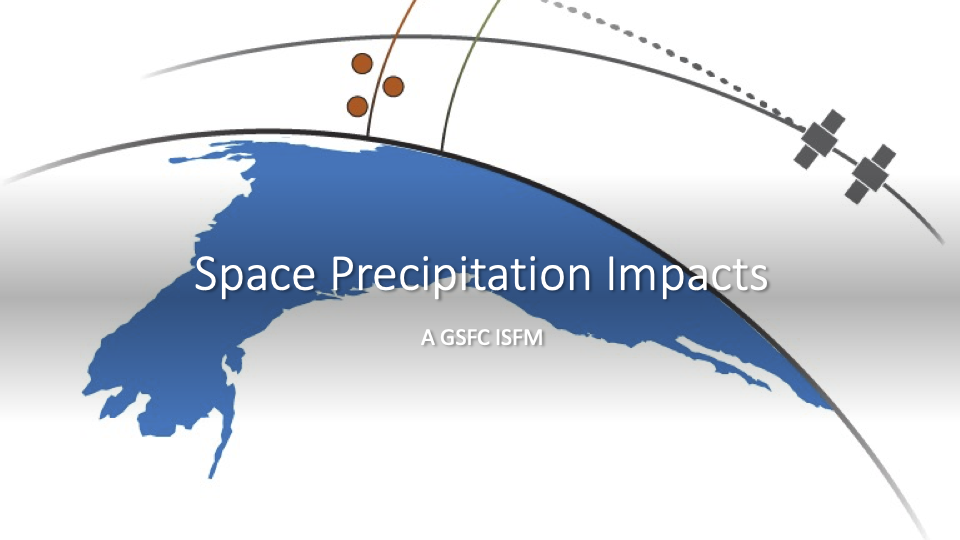
Space Precipitaiton Impacts
teaching
Teaching experience 1
Teaching experience 2